Zainab Chottani has shown in Paris. On October 2, she presented "Bleu Heritage" at Hôtel de Maisons, as part of MODA Productions' international showcase during fashion week.
The starting point was close to home, Hala pottery. The blue-and-white glazed ceramics of Sindh, shaped and painted by hand for generations. Chottani took the glaze, the medallions and the painted borders, and put them on cloth.
The show ran about fifteen minutes.It was a long time coming.
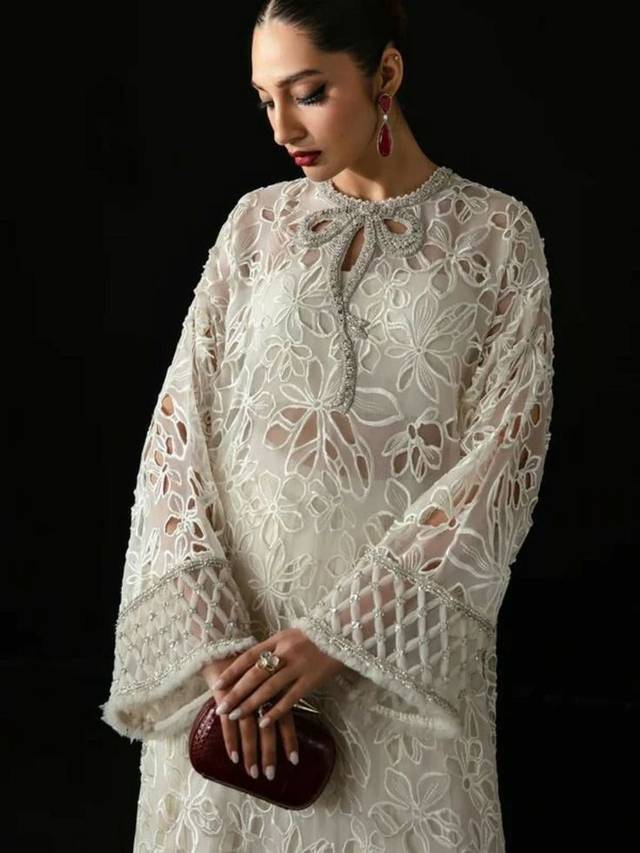
The fabrics are French lamé, raw and jacquard silk, and chiffon. The handwork is Pakistani: resham thread, kora and gota, laid out in florals and geometrics. Guipure lace, cutwork and beaded fringe sit alongside it. The silhouettes stay loose. Capes, dusters, drapes, kaftans, column skirts. Nothing is cinched too hard. The embroidery does the talking.
The Hala reference shows up in two ways. Sometimes it is literal: a round, plate-like medallion stitched onto a shoulder or a hem. Sometimes it is quieter: a band of tile pattern on a skirt, a cobalt border at a neckline. Both work.
The set helped. Models came down the staircase at Hôtel de Maisons and through gilded salons, to music produced by Shahi Hasan. Paris-based designer Sadaf Malatier contributed to the styling.
"Bleu Heritage" runs to fifteen looks. They fall into three parts, each built around its own colour story.
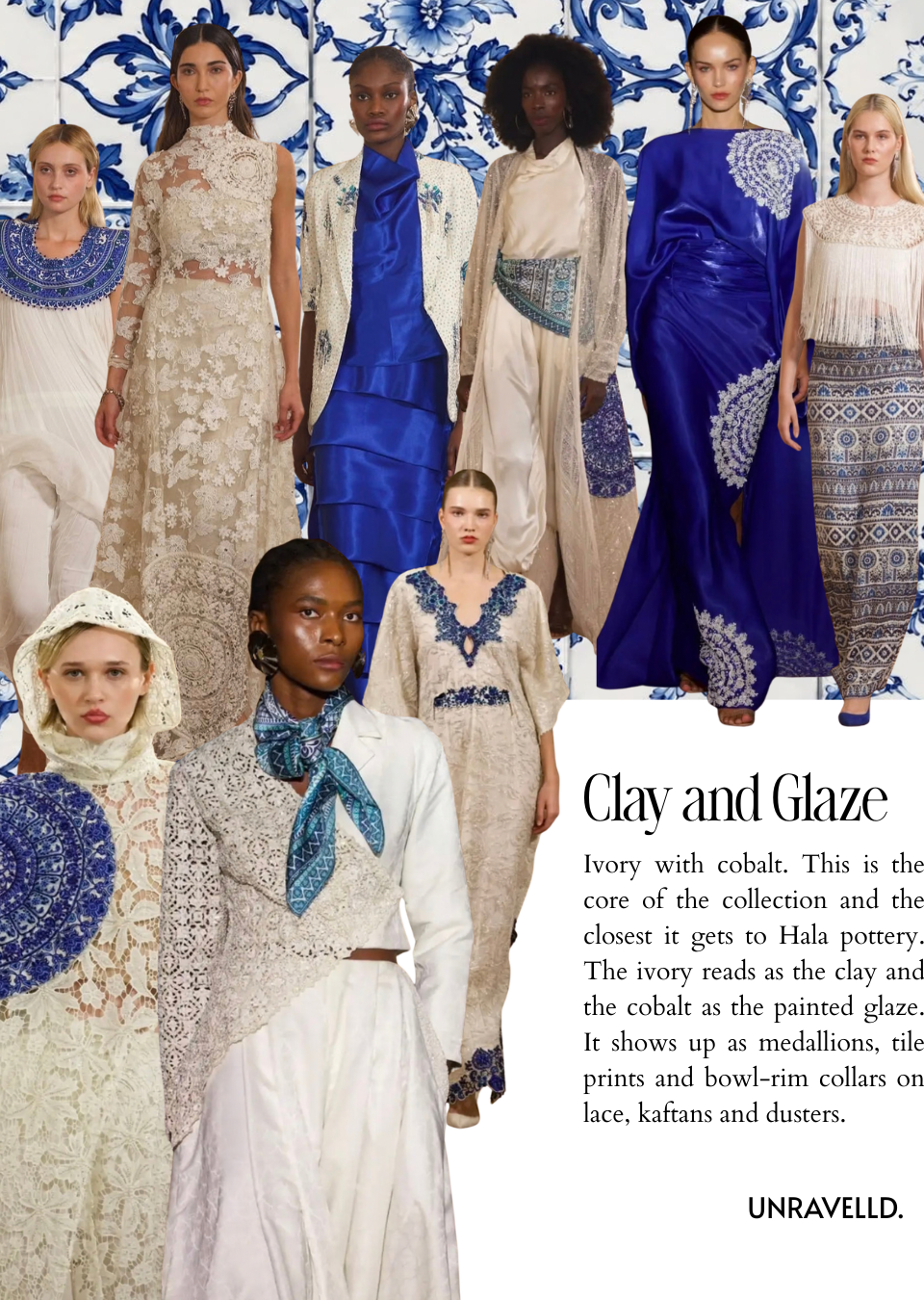
PART ONE: CLAY AND GLAZE
Nine looks. Ivory and cobalt, and the closest the collection gets to Hala pottery. The ivory reads as the clay and the cobalt as the painted glaze. The part builds slowly. It opens with a one-shoulder set in white-on-white floral lace, where round medallions sit quietly at the hem before any blue appears. The cobalt then arrives as detail. There's lace edging on an ivory kaftan, a tile-print scarf knotted over a cutwork jacket, a thick embroidered collar like the rim of a bowl, and a hooded guipure lace look with one large cobalt medallion across the shoulder, the most direct pottery reference in the show.
By the end, the balance tips. A beaded ivory jacket sits over a tiered cobalt satin column, and the part closes with a cobalt satin gown embroidered with white medallions. That's the pottery turned inside out: blue ground, white pattern.
The silhouettes stay loose throughout, in kaftans, dusters, column skirts and draped trousers, so the embroidery does the talking.
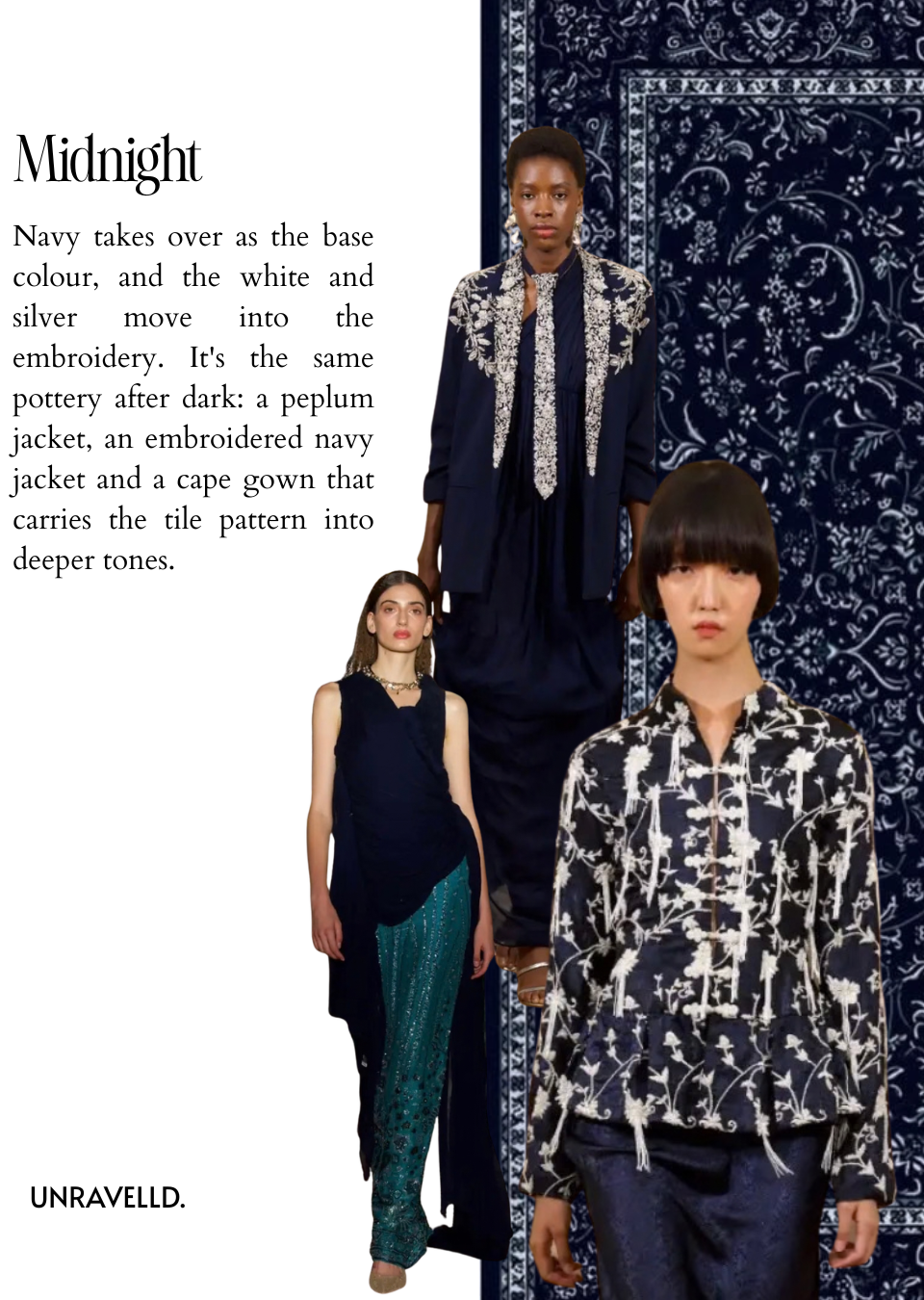
PART TWO: MIDNIGHT
Three looks. Navy takes over as the base, and the colour moves into the detail. A navy jacquard peplum jacket with a mandarin collar and knotted buttons is covered in white thread florals, with tassels falling from the vines. A navy jacket worn over a draped chiffon dress has silver embroidery running across the shoulders and down the front like a scarf, the kind of handwork Chottani's bridal clients know well, scaled down for evening. A navy chiffon top drapes long down one side over a teal sequinned skirt, bringing in a flash of glaze in a deeper shade.
It's the same pottery after dark, and it's the most wearable part of the collection.
PART THREE: JEWEL BOX
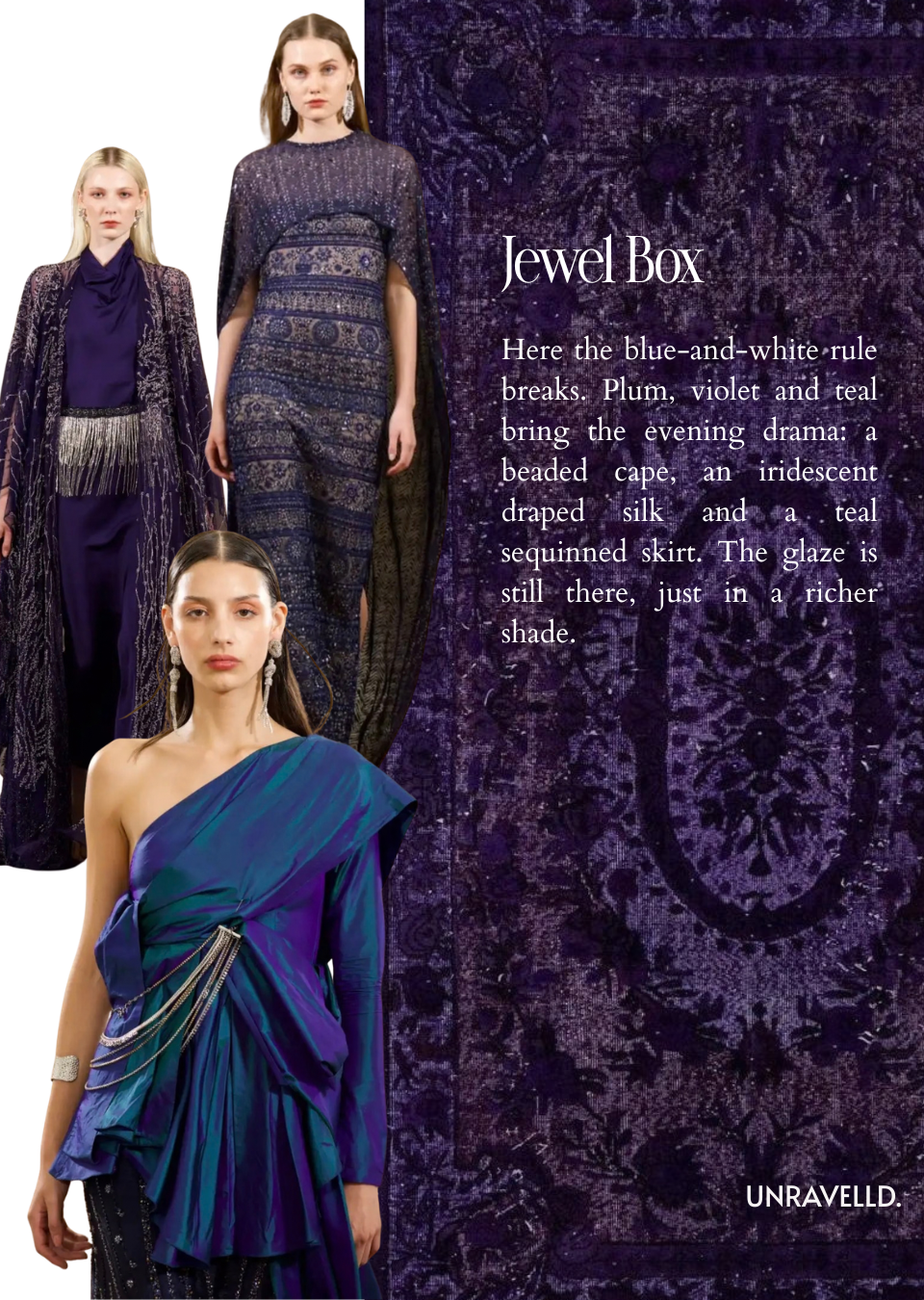
Three looks. Here the blue-and-white rule breaks. Plum, violet and indigo bring the evening drama. A plum satin column with a cowl neck sits under a sheer cape covered in silver beaded branches, finished with a fringed belt. Raw silk shifts from violet to teal as it moves, draped over one shoulder and gathered with silver chains over a beaded navy skirt. An indigo gown with a sheer sequinned cape is embroidered in bands of floral and medallion motifs, carrying the tile pattern from Part One into the darkest palette of the show. Capes, sequins and sheen tie the three together.
The glaze is still there, just in a richer shade.
Pakistani fashion has always had the craft. What it has lacked is the room.
Bridal and lawn keep the industry running at home, but they rarely travel as an idea. "Bleu Heritage" travels. It does not explain itself or soften itself for a foreign audience. It takes one regional craft, from one town in Sindh, and builds a full wardrobe around it. That is how a point of view gets noticed abroad.
Chottani has said one shouldn't dilute their identity to fit in. Her collection backs that up. The resham, gota and kora are not trimmings here. They are the main event.
It matters who was in the room too. The French ambassador to Pakistan, Nicolas Galey, attended. So did Ambassador Mumtaz Zahra Baloch. Fashion as soft diplomacy is not new. It is new for us at this scale.
The work behind it matters as much. Months of sampling, fittings, production, visas and freight, all while running a bridal, prêt and lawn business at home. Chottani has credited her team for getting it there.
Hala pottery has been in Pakistani homes for centuries. Last week, it walked down a staircase in Paris. Zainab Chottani made sure it arrived undiluted.