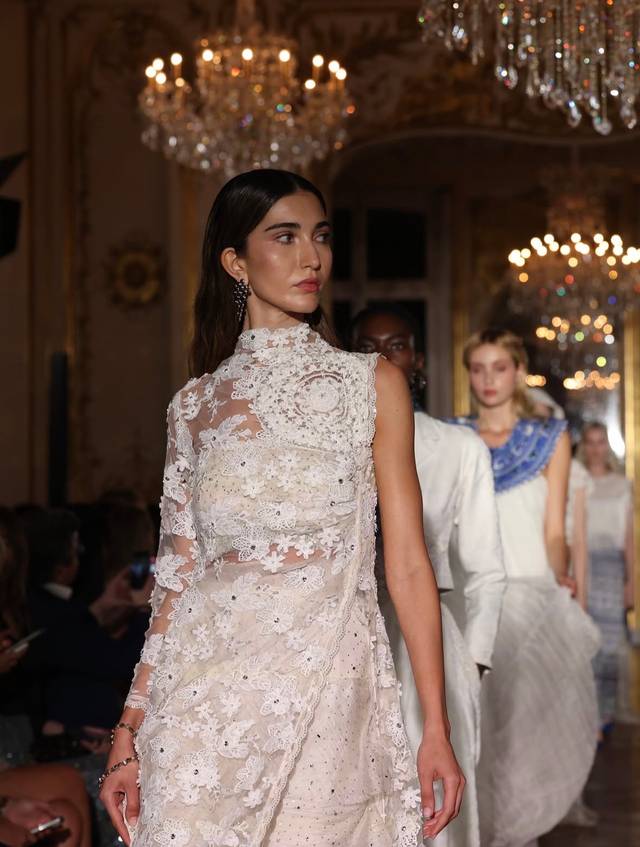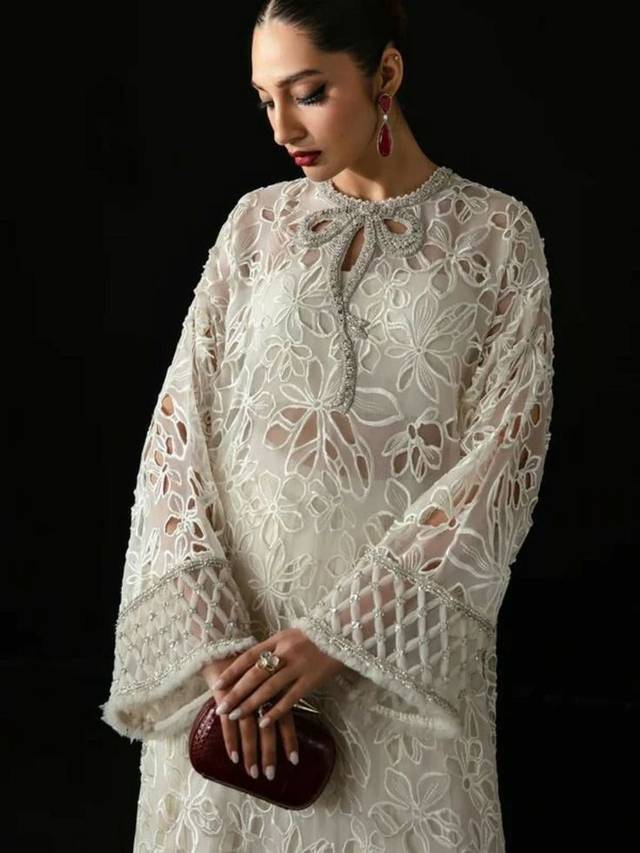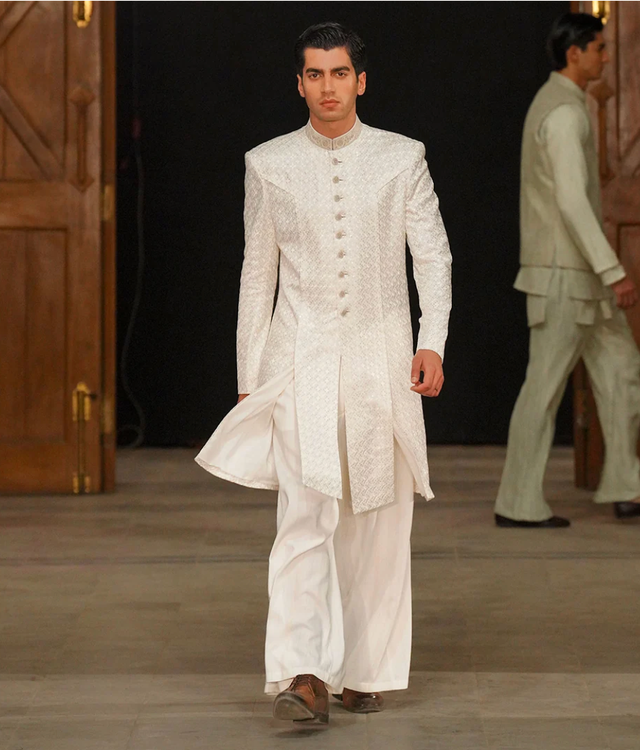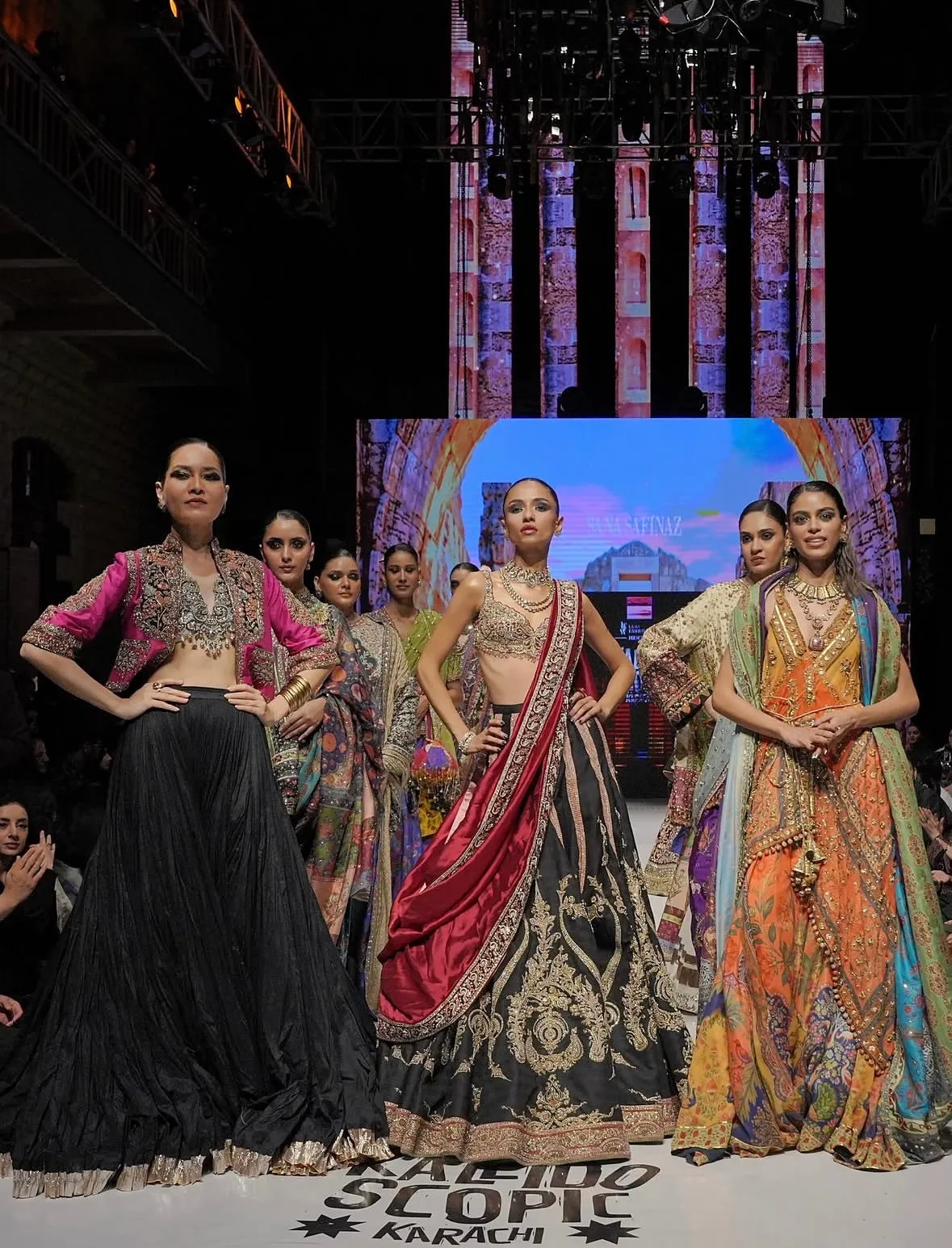
Kaleidoscopic Karachi, a one-day show presented by LAAM Fashion Week, brought five of the city's biggest fashion names to a single runway. The idea was simple: stop treating Karachi as a stop on the circuit and start treating it as the source.
LFW's Maheen Kardar framed it as a correction. So much of Pakistan's design history was built here that leaving the city out was never really an option. This show was the platform's way of saying it belongs to the whole country, not only the place it started.
A SHOW THAT STARTED WITH AN ARCHIVE
Before a single model walked, the evening opened with a retrospective by Tapu Javeri. His photographs cover more than forty years of Pakistani fashion. It was a smart way to begin: look back first, then look forward.
FIVE DESIGNERS, FIVE VERSIONS OF KARACHI
Deepak Perwani did what few can: he made glamour look effortless. Moving from ivory to olive velvet to burgundy sequins, the collection felt like one long evening in Karachi, getting richer as the night went on. His tuxedos were a reminder that no one in Pakistan tailors menswear with quite his confidence. Decades in, he's still setting the standard.
Wardha Saleem didn't just reference Karachi; she stitched its skyline straight onto the clothes. Colonial facades climbed up jackets and lehengas, while the Radio Pakistan tracksuits turned a city landmark into streetwear, easily the evening's most unexpected moment. It was nostalgic without feeling dusty, and personal without losing its sense of fun. From the woman who learned her craft at IVS, it felt like a love letter written in thread.
The Pink Tree Company, led by Mohsin Saeed, went back to Karachi's textile roots. Handwoven fabrics, block prints and layered embroidery gave the collection a festive feel, and cotton got special attention. The finale belonged to a silver-haired showstopper in an orange, olive and magenta block-printed lehenga trimmed in gota, a glorious celebration of craft and of beauty at every age. It was festive, rooted and deeply joyful, a love letter to the handmade traditions that shaped this city.
Khaadi came home. The brand began in Karachi before becoming a national name, and its collection played with the city's contradictions: print against weave, colour against colour, old against new, polished against raw.
Sana Safinaz closed the night the only way they know how: with full, unapologetic grandeur. Mastaani was a riot of heritage, with print-on-print lehengas in saffron, fuchsia and violet clashing gloriously against gota trims, tassels and hand-embroidered borders. As models danced down the ramp in the finale, it felt less like a show and more like a celebration, a fitting grand flourish to end Kaleidoscopic Karachi.
THE VENUE HAD A STORY TOO
The show was held at the Nusserwanjee Building, built by Karachi's Parsi community in 1903 and later moved, stone by stone, to become the campus of the Indus Valley School of Art and Architecture. That choice was not just about looks. Wardha Saleem studied and later taught at IVS. Khaadi's Saira and Shamoon Sultan met there as students before building Pakistan's first global retail brand. The runway sat inside the same walls where some of these careers began.
Pakistani fashion weeks often feel interchangeable. Same format, different city. Kaleidoscopic Karachi tried something different by giving the show a clear point of view: a place, a history and a reason to exist. That matters. A show built around identity gives designers something to respond to, not just a slot to fill. It also reminds the industry where its foundations are: in schools, workshops and textile traditions, not just on red carpets.
Globally, Pakistan is often reduced to one story. This show pushed back on that. A heritage building, a forty-year photo archive, a century of city landmarks turned into clothing: this is the kind of cultural storytelling international audiences respond to.
Pakistani fashion is at its strongest when it looks like it could only come from here. This was a step in that direction.
NOT PERFECT, BUT A START
Not every critic was fully sold. Dawn Images' Maliha Rehman, while praising the concept, said she hopes future editions push designers to take bigger creative risks. That's fair. The framework is strong. The next step is letting the clothes be as bold as the idea.
But as a first attempt at a runway that belongs to Karachi, it worked. The city was not just the backdrop. It was the subject.